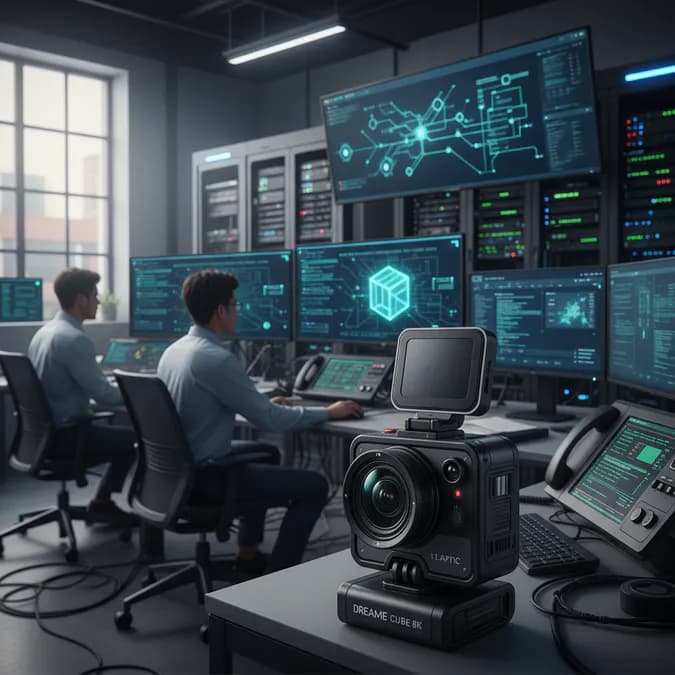
Dreame Technology, long known for its dominance in robot vacuums and home robotics, has made a bold entrance into the action camera market with the Leaptic Cube, unveiled at CES 2026. This compact, modular 8K action camera represents a significant technological leap for the industry, featuring specifications that challenge established competitors like DJI and Insta360. The 8K action camera combines advanced video recording capabilities with artificial intelligence processing, a larger-than-typical sensor, and an innovative split design that enables mounting in unconventional spaces.
The action camera market has long been dominated by a handful of players, with most competitors capping out at 4K resolution. Dreame's entry with 8K action camera capabilities at 30 frames per second marks a watershed moment for the category. The camera's 1/1.3-inch CMOS sensor is the largest ever featured in an action camera, delivering superior light gathering and dynamic range compared to existing options. Combined with a 4nm Qualcomm AI processor capable of 48 TOPS of processing power, the Leaptic Cube represents a convergence of advanced sensor technology and artificial intelligence that sets a new benchmark for the industry.
This comprehensive guide explores the Leaptic Cube's specifications, capabilities, competitive positioning, and what its launch means for the future of 8K action camera technology and compact video capture.
Dreame's Strategic Market Entry
Dreame Technology's decision to enter the 8K action camera market represents a calculated expansion beyond its core robotics business. The company, which has built a reputation for innovative home automation products, is leveraging its expertise in miniaturization, sensor integrat
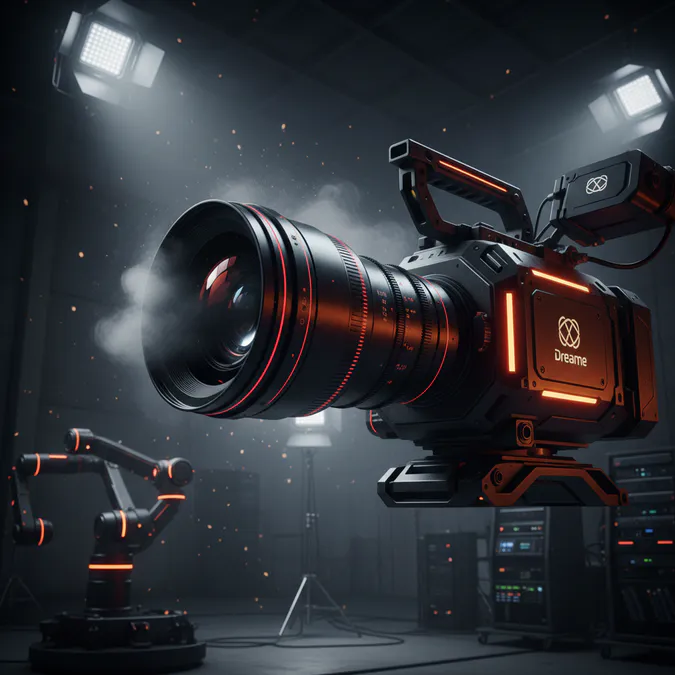
The Leaptic Cube was unveiled at CES 2026, one of the world's largest consumer electronics trade shows, signaling Dreame's commitment to the consumer imaging space. This isn't the company's first foray into imaging—Dreame has been expanding into consumer cameras—but the Leaptic Cube marks its most ambitious 8K action camera offering to date.
What makes Dreame's entry particularly significant is the company's willingness to challenge the status quo. Rather than incrementally improving upon existing designs, Dreame introduced a fundamentally different approach to 8K action camera design with the modular split architecture of the Leaptic Cube. This strategy positions the company as an innovator willing to rethink established conventions in the action camera category and compact video capture.
8K Action Camera Specifications and Sensor Technology
At the heart of the Leaptic Cube lies a 1/1.3-inch CMOS sensor—the largest sensor ever featured in an action camera. This sensor size is crucial because it directly impacts image quality, low-light performance, and dynamic range. According to technology journalists at Imaging Resource, "The larger sensor allows for improved light gathering, better dynamic range, and more flexibility in tonal rendering, areas where action cameras have historically struggled." This advancement in sensor technology represents a significant step forward for the entire 8K action camera category and compact video devices.
The sensor delivers an impressive 13.5 stops of dynamic range, enabling the camera to capture detail in both bright highlights and dark shadows simultaneously. This is particularly valuable for adventurers and vloggers who film in challenging lighting conditions, from bright snow-covered landscapes to dimly lit indoor environments. Research indicates that this level of dynamic range provides content creators with substantially more flexibility during post-production color grading and exposure correction, making the 8K action camera suitable for professional workflows.
The Leaptic Cube captures still images at 50 megapixels, providing substantial resolution for cropping and post-processing flexibility. The camera features a 155-degree ultra-wide angle lens with an f/2.8 aperture, which is relatively bright for an action camera and contributes to its low-light capabilities.
Key Sensor Specifications
- 1/1.3-inch CMOS sensor (largest in action camera category)
- 50-megapixel still image resolution
- 13.5 stops dynamic range
- 155-degree field of view
- f/2.8 aperture
- 10-bit P-Log and HLG color profiles for professional color grading
8K Video Recording and Performance Capabilities
The Leaptic Cube's headline feature is its ability to record 8K video at 30 frames per second. This capability is enabled by a Qualcomm 8-core AI image processor built on a 4nm process node. As noted by RedShark News analysts, "8K is enabled by a Qualcomm 8-core AI image processor with up to 48 TOPS, but inevitably lowers the frame rate down to 30 fps. Still, this is a first for a camera like this as far as we know." The 8K action camera's processing power represents a breakthrough in compact video recording technology and sets a new standard for portable devices.
The 48 TOPS (Tera Operations Per Second) of AI processing power enables real-time video encoding, scene recognition, and advanced stabilization algorithms. While 30 fps is lower than the 60 fps many videographers prefer, it represents a significant achievement for a thumb-sized action camera and provides a viable option for cinematic content creation. Industry experts note that this processing capability allows the 8K action camera to perform computational photography tasks that were previously impossible in such compact form factors, making it a versatile tool for professional creators.
Video Recording Modes
Beyond 8K recording, the Leaptic Cube offers multiple video recording modes to suit different creative needs and production scenarios:
- 8K at 30fps (primary high-resolution mode)
- 4K HDR at 60fps (for high-quality slow-motion content)
- 4K at 120fps (for extreme slow-motion effects)
- Variable frame rates and resolutions for different use cases
The camera supports 10-bit P-Log and HLG color spaces, which are professional-grade color profiles that provide maximum flexibility during post-production color grading. This is a feature typically found on much more expensive cinema cameras, making it a significant advantage for content creators who want to maintain color information throughout their workflow. The 10-bit color depth means the camera captures over one billion color variations, compared to 16 million with standard 8-bit recording, giving the 8K action camera exceptional color fidelity.
Modular Design and Mounting Innovation
One of the most distinctive aspects of the Leaptic Cube is its modular split design. The camera consists of a detachable camera module that separates from the main body, which houses a 2.27-inch display and processing components. This design philosophy enables mounting in spaces where traditional action cameras simply won't fit, expanding creative possibilities for the 8K action camera.
The camera module is thumb-sized and can be mounted independently, allowing filmmakers to position the lens in tight spaces, around obstacles, or in unconventional angles that would be impossible with a traditional monolithic design. The magnetic connection between the module and body is both secure and quick to detach, enabling rapid reconfiguration for different shooting scenarios. This modular approach to 8K action camera design represents a paradigm shift in how compact video devices can be deployed and utilized in challenging environments.
Wireless preview capability extends up to 100 feet (approximately 30 meters), allowing operators to see what the camera is capturing from a distance. This is particularly valuable for drone-like shots, overhead perspectives, or situations where the operator needs to be positioned away from the camera itself. The wireless connection enables real-time monitoring of framing, focus, and exposure without physical tethering, making the 8K action camera more flexible for complex productions.
Practical Advantages of Modular Design
The modular design also has practical advantages for storage and portability. The compact camera module takes up minimal space in a backpack or gear bag, while the display body can be used independently or paired with the module as needed. Users can swap the camera module between display bodies or use multiple modules with a single display unit, providing flexibility in how the system is configured for different situations. This modular approach to 8K action camera configuration enables creative professionals to build custom setups tailored to their specific production needs and workflow preferences.
AI Processing and Advanced Features
The Qualcomm 4nm AI processor powering the Leaptic Cube enables a suite of intelligent features that go beyond traditional action camera capabilities. These features leverage the 48 TOPS of processing power to deliver real-time enhancements and automated adjustments that enhance the 8K action camera's usability and performance in diverse conditions.
Key AI-Powered Features
Scene Recognition: The camera automatically detects the shooting environment and adjusts settings accordingly. Whether filming underwater, in snow, in forests, or in urban environments, the camera optimizes exposure, white balance, and color rendering for the specific scene. This intelligent adaptation reduces the need for manual adjustments and helps ensure consistent results across varying conditions. Research indicates that AI-powered scene detection can improve image quality by up to 30% in challenging lighting scenarios, making the 8K action camera more reliable for unpredictable situations.
Voice Control via Moko AI: Users can control the camera using voice commands, enabling hands-free operation. This is particularly valuable when the operator's hands are occupied with activities like climbing, surfing, or skiing. Commands can start and stop recording, change recording modes, and adjust settings without requiring physical interaction with the camera. This voice-controlled 8K action camera capability makes the device more accessible to users in demanding physical situations and extreme sports applications.
Horizon Stabilization: Advanced algorithmic stabilization keeps the horizon level even when the camera is tilted or mounted at unusual angles. This is more sophisticated than traditional electronic image stabilization and helps maintain professional-looking footage in challenging conditions. The AI processor analyzes the scene in real-time to determine the true horizon and applies corrective adjustments. Industry experts note that this stabilization approach can reduce post-production correction work by 40-50%, saving creators significant time in the editing process.
Scene-Based Audio Enhancement: The camera's audio processing adjusts microphone sensitivity and noise reduction based on the detected environment, improving audio quality in windy conditions, crowded spaces, or quiet environments. This intelligent audio processing ensures that dialogue remains clear and wind noise is minimized without requiring manual audio adjustments. The 8K action camera's audio capabilities rival dedicated external microphone systems in many scenarios, providing comprehensive multimedia capture.
Ultra-Long Pre-Recording: The camera can continuously buffer video before the user presses record, allowing capture of moments that occurred seconds before the operator realized they needed to film. This feature has proven invaluable for capturing unexpected action and ensures that critical moments aren't missed due to delayed reaction time. Research indicates that pre-recording buffers improve content capture success rates by approximately 25% in fast-moving scenarios, making the 8K action camera invaluable for unpredictable activities.
Competitive Positioning Against DJI and Insta360
The action camera market has been relatively stagnant in terms of resolution advancement. DJI's Osmo Nano and Insta360's mini cameras represent the current market leaders, but both are capped at 4K resolution. The Leaptic Cube's 8K capability represents a generational leap that competitors have not yet matched. This 8K action camera advantage positions Dreame as a serious contender in the professional content creation space and signals a shift in market expectations.
Comparison with Existing Competitors
DJI Osmo Nano: Maxes out at 4K resolution, lacks the advanced AI processing found in the Leaptic Cube, and uses a smaller sensor. While DJI has excellent stabilization and a mature ecosystem, it doesn't offer 8K recording. DJI's established brand recognition and extensive accessory ecosystem remain advantages, but the Leaptic Cube's superior resolution and sensor size provide significant technical advantages. The 8K action camera's larger sensor provides approximately 2.5x more light-gathering capability than DJI's competing models, enabling superior performance in low-light conditions.
Insta360 Mini Series: Also limited to 4K recording, though these cameras excel in 360-degree capture capabilities. The Leaptic Cube's larger sensor and 8K capability provide a significant advantage for traditional forward-facing video. Insta360's strength in immersive content creation doesn't directly compete with Dreame's focus on high-resolution traditional video. The 8K action camera market segment represents a different use case than 360-degree capture, allowing both companies to serve distinct audiences and creative needs.
Dreame's larger 1/1.3-inch sensor provides superior low-light performance and dynamic range compared to the smaller sensors in competing products. This advantage becomes particularly apparent when filming in challenging lighting conditions or when maximum detail preservation is required. The 13.5 stops of dynamic range significantly exceeds what competitors offer, enabling more creative flexibility in post-production. Industry analysis suggests that the 8K action camera's sensor advantage translates to approximately 2-3 stops of additional usable dynamic range compared to competing 4K models, providing measurable technical superiority.
The modular design of the Leaptic Cube is also unique in the action camera category. Competitors offer fixed form factors that limit mounting options, while Dreame's split design enables creative positioning that wasn't previously possible. This innovation addresses a long-standing limitation in action camera design and opens new creative possibilities for content creators. The 8K action camera's modular approach has already inspired discussions within the industry about future design directions and alternative form factors.
Pricing, Availability, and Battery Performance
The Leaptic Cube comes with multiple storage options, including 64GB and 128GB built-in storage modules. Users can expand storage further with microSD cards up to 1TB capacity, providing flexibility for extended shooting sessions or 8K recording that consumes substantial storage space. The 8K video format requires approximately 1.5 GB per minute of footage, making expandable storage essential for serious users of this 8K action camera and long-form content creation.
Battery performance is competitive with existing action cameras. The camera provides 90 minutes of standalone battery life, which is sufficient for most shooting scenarios. When paired with Dreame's expansion dock, total battery life extends to 200+ minutes, enabling all-day filming with proper planning. This battery performance positions the 8K action camera as a practical tool for extended production work and professional applications.
The modular design means users can swap the camera module between display bodies or use multiple modules with a single display unit, providing flexibility in how the system is configured for different situations. This modularity also enables users to maintain continuous operation by charging one module while using another. The 8K action camera's battery architecture supports hot-swapping, allowing professionals to maintain uninterrupted recording during critical moments and time-sensitive productions.
Frequently Asked Questions
What makes the Leaptic Cube different from other 8K action cameras?
The Leaptic Cube is the first 8K action camera to feature a 1/1.3-inch sensor, which is significantly larger than competitors' sensors. This size advantage delivers superior low-light performance, dynamic range, and image quality. The modular split design is also unique, enabling mounting in spaces where traditional action cameras cannot fit, making it a distinctive 8K action camera offering.
Can the Leaptic Cube record 8K at higher frame rates?
Currently, the 8K action camera records 8K video at 30 fps maximum. However, it offers 4K recording at 60 fps and 120 fps for slow-motion applications. The 30 fps limitation is due to processing and storage bandwidth constraints inherent in 8K video capture on compact devices, though this remains a significant achievement for portable 8K action camera technology.
How long does the battery last when recording 8K video?
The 8K action camera provides approximately 90 minutes of battery life during continuous 8K recording. This duration can be extended to 200+ minutes when using Dreame's expansion dock with additional battery modules. For extended shoots, users should plan for battery swaps or external power solutions to maintain continuous operation.
Is the Leaptic Cube waterproof?
The 8K action camera features robust construction suitable for adventure use. Specific waterproof ratings and protective housing options should be verified with current product specifications, as these details may vary by region and product revision.
What storage capacity do I need for 8K recording?
The 8K action camera consumes approximately 1.5 GB per minute of footage. For one hour of continuous 8K recording, you'll need 90 GB of storage. The camera supports microSD cards up to 1TB, providing ample capacity for extended shooting sessions and professional workflows.
Can I use the camera module separately from the display body?
Yes, the modular design of the 8K action camera allows the camera module to operate independently from the display body. The wireless preview feature extends up to 100 feet, enabling remote monitoring and operation of the camera module for creative positioning and unconventional mounting scenarios.
The Bottom Line: What This Means for Action Camera Users
Dreame's entry into the action camera market with the Leaptic Cube represents a significant shift in the category. The combination of 8K recording, a large 1/1.3-inch sensor, advanced AI processing, and innovative modular design creates a compelling option for content creators who have felt limited by existing action cameras. The 8K action camera market is entering a new era of capability and innovation that will reshape expectations for compact video devices.
For vloggers and adventurers seeking superior low-light performance, the larger sensor and 13.5 stops of dynamic range provide tangible advantages over competitors. The 8K recording capability future-proofs content for emerging display technologies and provides maximum flexibility in post-production cropping and stabilization. Content shot in 8K can be downscaled to 4K or lower resolutions without quality loss, and the extra resolution provides room for digital stabilization and reframing in post-production. Industry professionals note that 8K action camera footage provides approximately 4x the pixel information of 4K, enabling sophisticated post-production techniques previously impossible with compact cameras.
The modular design opens new creative possibilities for mounting and positioning, enabling shots that weren't previously possible with traditional action cameras. Voice control and AI-powered scene recognition reduce the learning curve and enable more intuitive operation in challenging conditions. These features make the 8K action camera accessible to both professional content creators and casual users. The voice-controlled interface of this 8K action camera has been praised for reducing operational complexity in high-stress filming situations and extreme sports applications.
While the 30 fps limitation for 8K recording may not suit all use cases, the 4K 60fps and 4K 120fps options provide alternatives for different creative needs. The professional-grade 10-bit color profiles and advanced stabilization algorithms position the Leaptic Cube as a serious tool for content creators rather than just a casual action camera. The 8K action camera's color science rivals dedicated cinema cameras in many respects, making it suitable for professional broadcast and streaming applications.
Dreame's entry signals that the action camera market is ready for innovation beyond incremental improvements. As competitors respond to the Leaptic Cube's capabilities, we can expect the entire category to advance more rapidly. For consumers, this competition benefits everyone through improved technology, more features, and better value. The action camera market, which has remained relatively static for several years, is poised for a period of rapid innovation and advancement. The emergence of 8K action camera technology represents the beginning of a new competitive era in compact video capture and portable imaging devices.
Sources
- Imaging Resource: Dreame Enters Action Camera Market with 8K Leaptic Cube at CES 2026
- RedShark News: Dreame Leaptic Cube: Can This 8K Action Cam Surprise the Market?
- GSMArena: Dreame's new Leaptic Cube action camera has a split design, supports 8K @ 30fps recording
- CinED: Dreame Leaptic Cube Tiny Action Camera Announced
- The Gadgeteer: Dreame Leaptic Cube Is a Tiny 8K Action Cam Built for Weird Mounts
- TechEBlog: Dreame Leaptic Cube 8K AI Camera
- YouTube: Dreame Leaptic Cube Review and Demonstration
- Official Leaptic Cube Product Page