
The video technology landscape is rapidly evolving, with 8K production taking center stage. Recent advancements highlighted at the NAB Show are driving wider adoption of 8K content creation, encoding, mastering, and distribution. Live 8K productions are now a reality for major events like NBA games, concerts, and the upcoming Paris Olympics, thanks to streamlined workflows and improved codecs. This article delves into the key technological breakthroughs that are fueling the rise of 8K and what it means for the future of video production.
The Rise of 8K Production
8K video production, with its stunning 7680x4320 resolution, offers sixteen times the detail of HD and four times that of 4K. This leap in visual fidelity unlocks unprecedented possibilities for large screens, VR headsets, and immersive experiences. While initially hampered by high costs and hardware limitations, 8K production adoption is now accelerating due to ad
NAB Show Highlights: Key Advancements in 8K Technology
The NAB Show has consistently served as a pivotal platform for showcasing the latest innovations in video technology. This year's event underscored significant progress in 8K production, with experts highlighting advancements across the entire workflow, from capture to distribution [5]. The discussions and demonstrations at the NAB Show emphasized the growing accessibility and practicality of 8K, signaling a shift from niche applications to broader industry adoption. The 8K Association also plays a crucial role in driving this ecosystem growth, with upcoming NAB 2025 demos featuring cutting-edge 8K hardware and displays [1].
8K Content Capture and Encoding Improvements
Capturing and encoding 8K content efficiently is paramount for its widespread adoption. Key improvements in this area include:
- Advanced Camera Sensors: Cameras like the RED Digital Cinema cameras and the Nikon Z9 now support native 8K recording, enabling higher quality source footage. The Nikon Z9, for instance, supports native 8K recording in HEVC and ProRes formats.
- Efficient Codecs: Codecs like HEVC/H.265 are crucial for compressing 8K video without significant quality loss. MainConcept codecs are used in over 90% of today's professional video processing, including advancements in 8K [2].
- Cloud Encoding: Cloud-based encoding solutions are making 8K production more accessible and scalable. MainConcept demonstrated real-time 8K encoding via AWS for live broadcast, supporting HEVC/H.265 and Nikon Z9, which reduces costs for multiple channels [2].
Uday Mathur, CTO of RED Digital Cinema, noted that 8K content is already being delivered to headsets for live events, suggesting that 8K will become pervasive as hardware costs decrease [5].
Mastering and Distribution of 8K Content
Mastering and distributing 8K content present unique challenges due to the massive file sizes and bandwidth requirements. However, advancements in several areas are making it more feasible:
- Improved Codecs: As mentioned earlier, efficient codecs like HEVC/H.265 are essential for reducing file sizes without compromising quality.
- High-Speed Networks: The rollout of 5G and advancements in internet infrastructure are enabling faster and more reliable distribution of 8K content.
- Cloud-Based Solutions: Cloud platforms offer scalable storage and processing power, making it easier to manage and distribute 8K content.
Live 8K Productions: NBA Games, Concerts, and the Paris Olympics
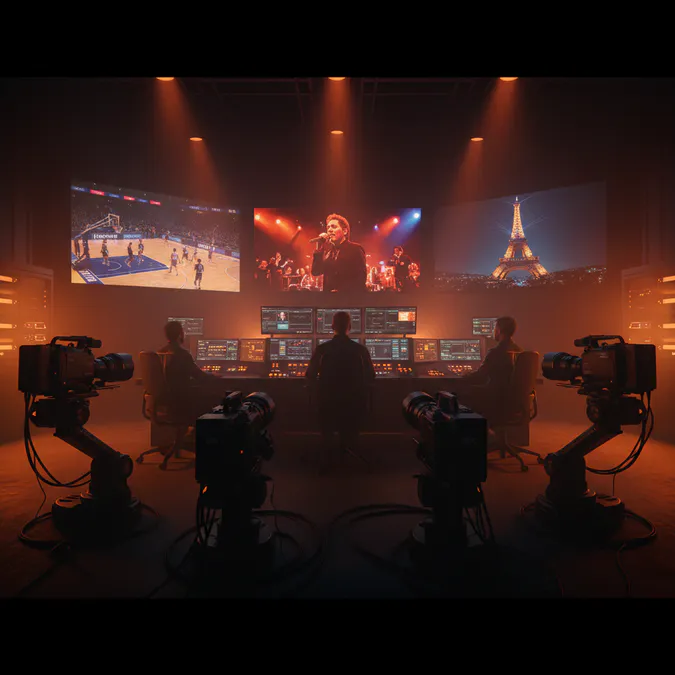
Live 8K productions are no longer a distant dream but a present-day reality. Examples include:
- NBA Games: Live 8K broadcasts of NBA games are showcasing the immersive potential of the format.
- NHK Concerts: Spin Digital and NHK have collaborated on live 8K concert broadcasts, demonstrating the feasibility of streaming 8K content over the open internet. Mauricio Alvarez-Mesa, CEO of Spin Digital, stated that they streamed a concert live in 8K to several locations over the open internet, proving the viability of current technology [5].
- Paris Olympics: The Paris Olympics are planned to feature live 8K productions, further solidifying 8K's role in major live events.
Impact of Streamlined Workflows and Improved Codecs
Streamlined workflows and improved codecs are critical enablers of 8K production. These advancements result in:
- Reduced Costs: Efficient codecs and cloud-based solutions lower the storage and processing costs associated with 8K content.
- Faster Turnaround Times: Streamlined workflows accelerate the production process, making it easier to create and distribute 8K content quickly.
- Enhanced Quality: Improved codecs preserve the quality of 8K video, ensuring a visually stunning viewing experience.
Juan Reyes, Director of Operations at the 8K Association, emphasized that 8K is being used further and further into the production process [5].
Future Trends in 8K Production
The future of 8K production looks promising, with several key trends on the horizon:
- High Frame Rates: High frame rates like 8K 120Hz are emerging for live events and VR headsets, offering even smoother and more immersive viewing experiences. RED Digital Cinema customers have been capturing 8K content for 10 years, now expanding to high frame rates like 8K 120Hz for live events [5], [6].
- Direct-to-Cloud Workflows: Cameras are being designed for direct-to-cloud workflows, further streamlining the production process.
- Wider Adoption: As display prices continue to drop and 5G/edge computing matures, 8K is poised for broader adoption in broadcast, streaming, and cinema.
- 8K Association Initiatives: The 8K Association is actively promoting the growth of the 8K ecosystem through various initiatives, including NAB 2025 panels and demos [1]. These demos will feature products from Samsung, AMD, 4BY4, BZB GEAR, and WyreStorm.
The Bottom Line
The advancements in 8K technology are paving the way for a new era of ultra-high-definition video production. With improved codecs, streamlined workflows, and the growing availability of 8K-enabled devices, the future of video is undoubtedly in 8K. As costs decrease and technology continues to evolve, 8K is set to become a pervasive standard in broadcast, streaming, and beyond, offering viewers an unparalleled visual experience.
FAQ
What is 8K production?
8K production refers to the creation of video content in 8K resolution, which is 7680x4320 pixels, offering significantly higher detail than HD and 4K.
Why is 8K production becoming more popular?
Advancements in technology, including improved camera sensors, efficient codecs, and cloud-based solutions, are making 8K production more accessible and cost-effective.
What events are using 8K production?
Major events like NBA games, NHK concerts, and the upcoming Paris Olympics are utilizing 8K production to enhance viewer experiences.
Sources
- Automated Pipeline
- 8K Association Announces NAB 2025 Show Plans
- MainConcept to Demo Cloud-Ready 8K Broadcast Technology at NAB Show
- NAB Show Panel to Explore 8K Tech and Its Impact on the Production Process
- From Cameras to Code: The Next Generation of Live Production
- Source: youtube.com
- Source: nabshow.com