10 Proven Strategies for Effortless AI Video Creation
How can developers build applications using AI video generation models?
Explore 10 proven strategies for effortless AI video creation and learn how to leverage AI video generation models for innovative applications.
The rise of artificial intelligence (AI) has permeated nearly every aspect of technology, and video creation is no exception. AI video generation models are rapidly evolving, offering developers unprecedented opportunities to build innovative applications. From automating video production for marketing campaigns to creating personalized content experiences, the possibilities are vast. This article delves into how developers can effectively leverage these powerful AI tools to build the next generation of video applications.
Understanding AI Video Generation
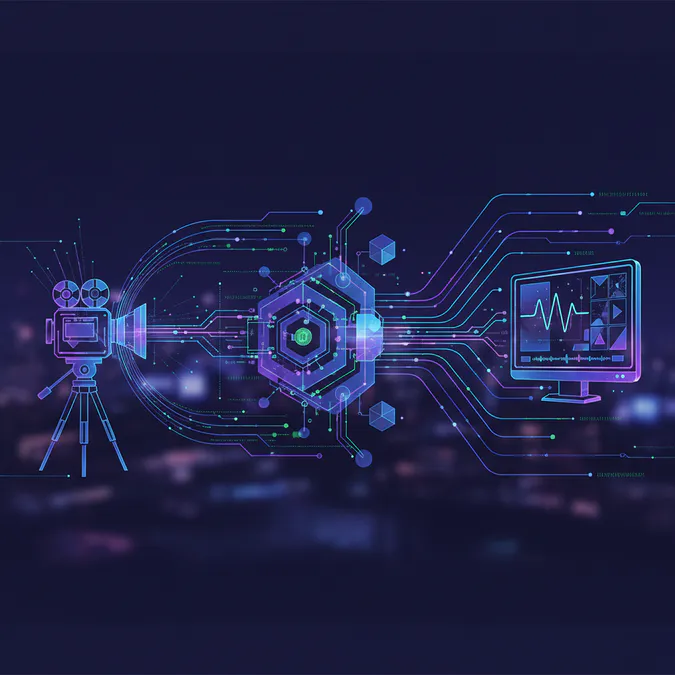
Before diving into the development process, it's crucial to understand the underlying principles of AI video generation. These models typically rely on deep learning techniques, particularly generative adversarial networks (GANs) and transformers. GANs consist of two neural networks, a generator and a discriminator, that compete against each other. The generator creates synthetic video content, while the discriminator attempts to distinguish between real and generated videos. Through this adversarial process, the generator learns to produce increasingly realistic and compelling video outputs.
Transformers, on the other hand, excel at capturing long-range dependencies in sequential data. This makes them well-suited for video generation tasks that require maintaining coherence and consistency over time. Many state-of-the-art AI video generation models combine elements of both GANs and transformers to achieve optimal performance.
Key Takeaways
GANs (Generative Adversarial Networks): Use a generator and discriminator to create realistic video.
Transformers: Capture long-range dependencies for coherent video sequences.
Hybrid Models: Combine GANs and transformers for enhanced performance.
Identifying Use Cases for AI Video Applications
The potential applications of AI video generation are diverse and span numerous industries. Here are a few compelling examples:
Marketing and Advertising: Automate the creation of personalized video ads tailored to specific demographics or interests. Generate product demos, explainer videos, and social media content at scale.
Conten
t Creation: Empower users to create professional-quality videos without requiring extensive technical skills. Develop tools for generating animated stories, music videos, and visual effects.
Education and Training: Create engaging and interactive learning experiences through AI-generated simulations and tutorials. Develop personalized learning paths based on individual student needs.
Entertainment: Generate realistic virtual characters and environments for video games and movies. Create immersive virtual reality experiences that respond to user interactions.
Accessibility: Convert text or audio into visually appealing videos for individuals with disabilities. Provide real-time translation and captioning services.
Building Applications with AI Video Generation Models
Now, let's explore the practical steps involved in building applications using AI video generation models:
1. Choosing the Right Model
Several pre-trained AI video generation models are available, each with its own strengths and weaknesses. Some popular options include:
Model A: Known for its ability to generate high-resolution videos with realistic textures and lighting.
Model B: Excels at creating stylized animations and visual effects.
Model C: Optimized for generating short-form video content for social media platforms.
Consider the specific requirements of your application when selecting a model. Factors to consider include video quality, generation speed, customization options, and licensing terms.
2. Data Preparation and Preprocessing
AI video generation models typically require large amounts of training data to achieve optimal performance. If you plan to fine-tune a pre-trained model or train a new model from scratch, you'll need to gather and prepare a relevant dataset. This may involve collecting video clips, annotating objects and scenes, and cleaning up noisy or irrelevant data.
3. Model Integration and Fine-Tuning
Once you've chosen a model and prepared your data, you can integrate the model into your application. This typically involves using a programming language like Python and a deep learning framework like TensorFlow or PyTorch. You may need to fine-tune the model on your specific dataset to improve its performance on your target task. Fine-tuning involves adjusting the model's parameters to minimize the difference between its predictions and the ground truth data.
4. User Interface (UI) Design
Creating a user-friendly interface is crucial for making your AI video application accessible to a wide audience. Design an intuitive UI that allows users to easily input their desired parameters, preview the generated video, and customize the output to their liking. Consider incorporating features such as drag-and-drop functionality, real-time feedback, and collaborative editing tools.
5. Deployment and Scaling
Once your application is ready, you'll need to deploy it to a suitable platform. This could involve hosting it on a cloud server, distributing it as a mobile app, or integrating it into an existing website or service. Consider the scalability of your application when choosing a deployment strategy. Ensure that your infrastructure can handle a large number of users and requests without compromising performance.
Challenges and Considerations
While AI video generation offers tremendous potential, it also presents several challenges and considerations:
Computational Resources: Training and running AI video generation models can be computationally intensive, requiring access to powerful GPUs and large amounts of memory.
Data Bias: AI models can inherit biases present in the training data, leading to unfair or discriminatory outcomes. It's crucial to carefully curate and preprocess your data to mitigate these biases.
Ethical Concerns: The ability to generate realistic fake videos raises ethical concerns about misinformation and manipulation. Developers must consider the potential misuse of their technology and implement safeguards to prevent abuse.
Conclusion
AI video generation is revolutionizing the way videos are created and consumed. By understanding the underlying principles of these models and following the steps outlined in this article, developers can build powerful applications that automate video production, personalize content experiences, and unlock new creative possibilities. As the technology continues to evolve, we can expect to see even more innovative and impactful applications of AI video generation in the years to come.
FAQs About AI Video Generation
What is AI video generation? AI video generation refers to the use of artificial intelligence technologies to create video content automatically, often using models like GANs and transformers.
How can AI video generation be used in marketing? AI video generation can automate the creation of personalized video ads, product demos, and social media content, enhancing marketing efforts.
What are the challenges of using AI video generation? Challenges include the need for significant computational resources, potential data bias, and ethical concerns regarding misinformation.
Additional Resources
For further reading and exploration of AI video generation, consider checking these authoritative sources: