
Introduction
The video production industry is on the brink of a major transformation, driven by advancements in AI video production technology. By 2026, the global AI video market is projected to reach an astounding $42 billion, up from $3.86 billion in 2024. This growth is fueled by enhanced video quality, cost reductions, and widespread adoption across various
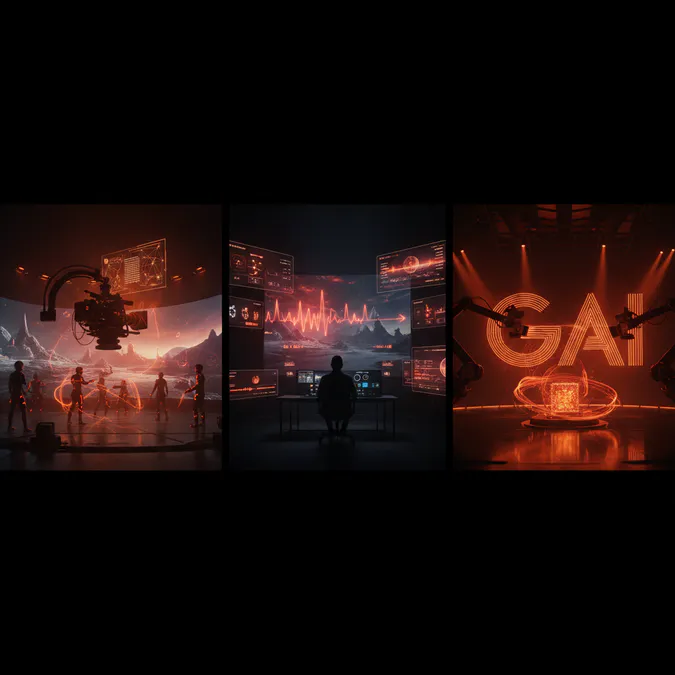
AI Video Production Trends
As we approach 2026, several trends are emerging in AI video production that are reshaping how content is created and consumed:
- Hyper-Personalization at Scale: AI enables the creation of highly personalized video content tailored to individual viewer preferences, enhancing engagement and effectiveness.
- Generative AI Tools: Tools like OpenAI's Sora and Runway Gen-3 are at the forefront, allowing creators to generate videos from text prompts.
- Automated Editing and Production: AI-driven capabilities streamline the editing process, enabling faster turnaround times and reducing production costs.
- Vertical Video Dominance: The 9:16 aspect ratio is rapidly becoming the default format for video content, driven by the popularity of short-form social media platforms.
Generative AI Tools
Generative AI tools are revolutionizing the way videos are produced. These tools allow users to create videos from simple text descriptions, making the process more accessible to creators of all skill levels. Key tools include:
- OpenAI's Sora: This innovative tool leverages advanced AI algorithms to transform text into engaging video content, significantly reducing the time and effort required for production.
- Runway Gen-3: Known for its robust capabilities, Runway Gen-3 offers features that enhance creative workflows, including image-to-video generation and synchronized audio-visual creation.
As of early 2026, Google's Veo 3.1 dominates the AI video generation market with a staggering 96.4% market share, showcasing the competitive landscape's winner-take-most dynamics. Meanwhile, text-to-video workflows account for 65.7% of all AI video orders, indicating a strong preference among users for this innovative approach.
Impact on Video Editing
The impact of AI on video editing is profound, fundamentally changing how content is created and refined. Key developments include:
- Automated Editing: AI tools can now perform complex editing tasks, such as color grading and sound design, with minimal human intervention, allowing creators to focus on storytelling rather than technical details.
- Time and Cost Efficiency: Companies utilizing AI for video production report savings of up to 80% in both time and budget compared to traditional methods, democratizing access to high-quality video creation.
- Increased Adoption: As of 2026, 63% of video marketers have integrated AI tools into their workflows, a significant increase from 51% in 2025. This trend underscores the growing reliance on AI in the industry.
- AI-Generated Video Ads: Approximately 30% of all digital video advertising is now generated by AI, with projections suggesting this figure could rise to 40% by the end of 2026. This shift represents a fundamental change in how advertising content is created and deployed at scale.
As the bottleneck in video production shifts from capacity constraints to decision-making speed and creative clarity, the role of AI in video production will continue to expand. According to an analysis from LTX Studio, "AI video quality isn't the moat anymore—creative direction is. As generation capabilities reach near-parity across platforms, the competitive advantage has shifted from what AI can create to how effectively creators direct it."
In conclusion, the future of video production is being shaped by AI technologies that enhance creativity and streamline processes. As we move towards 2026, understanding these trends and tools will be crucial for anyone involved in video production, from marketers to content creators.
Key Takeaways
- The AI video production market is set to grow significantly by 2026.
- Hyper-personalization and generative AI tools are key trends.
- AI is transforming video editing, making it more efficient and cost-effective.
- Adoption of AI tools in video marketing is rapidly increasing.
FAQ
What is AI video production?
AI video production refers to the use of artificial intelligence technologies to automate and enhance various aspects of video creation, including editing, generation, and personalization.
How is AI changing video editing?
AI is changing video editing by automating complex tasks, improving efficiency, and allowing creators to focus more on storytelling rather than technical details.
What are the benefits of using AI in video production?
The benefits of using AI in video production include reduced costs, faster turnaround times, and the ability to create highly personalized content at scale.
Sources
- Automated Pipeline
- OpenAI Sora: Technical Overview and Capabilities
- Goldman Sachs: Generative AI and the Future of Creative Work
- Gartner: AI Video Generation Magic Quadrant 2026
- Source: vivideo.ai
- Source: ltx.studio
- Source: teamunitymedia.com
- Source: sellerscommerce.com
- Source: wyzowl.com
- Source: 336productions.com
- Source: siegemedia.com
- Source: wistia.com
- Source: vidio.ai