Table of Contents
- Blackmagic's Live Production Camera for Apple Integration
- Strategic Market Positioning
- Key Features and Technical Specifications
- Connectivity and Integration
- Industry Context: NAB 2026 Announcements
- Competitive Landscape
- Virtual Production and Live Broadcasting Evolution
- Apple Ecosystem Advantages for Professionals
- Workflow Efficiency Gains
- Market Implications and Competitive Dynamics
- Broadcast and Streaming Applications
- Technical Integration Considerations
- Future Implications for Professional Video Production
- What This Means for Production Professionals
- Conclusion
Blackmagic's Live Production Camera for Apple Integration
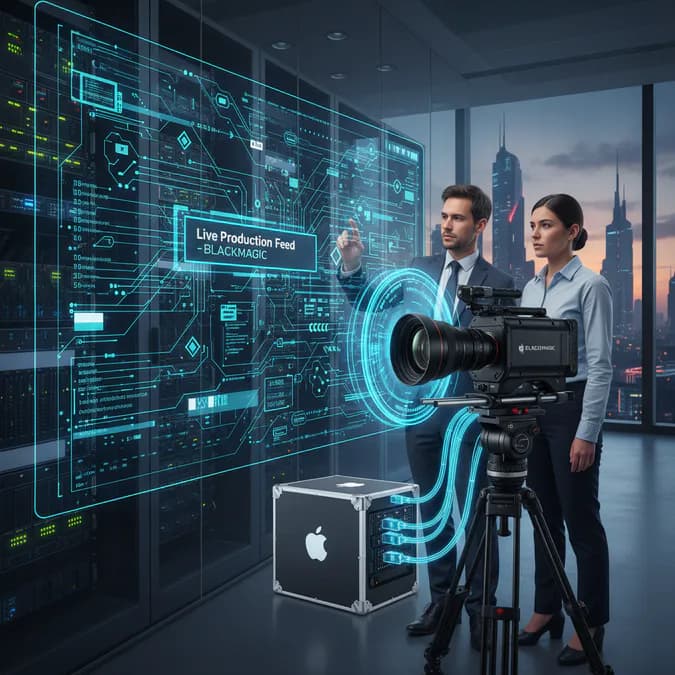
The 2026 NAB Show brought significant announcements from major video technology manufacturers, with Blackmagic Design unveiling a new live production camera designed specifically for Apple integration. This development marks an important convergence of professional video production tools and Apple's ecosystem, addressing growing demand from content creators

Strategic Market Positioning
Blackmagic Design's announcement of a dedicated live production camera for Apple represents a strategic move to capture the growing segment of professionals who rely on Apple's hardware and software infrastructure. The camera is engineered to provide native compatibility with Apple's professional video applications and workflows, eliminating many of the integration challenges that have traditionally plagued cross-platform production environments.
The live production camera combines Blackmagic's renowned image quality with optimized connectivity for Apple systems. This integration allows producers to streamline their workflows, reducing setup time and technical complexity on set. The camera supports direct integration with Apple's professional video software, enabling real-time monitoring, control, and data management through familiar interfaces.
Key Features and Technical Specifications
While specific technical details continue to emerge, the camera is expected to deliver Blackmagic's signature image quality with advanced sensor technology. The device likely incorporates multiple connectivity options including Thunderbolt for direct Apple device integration, ensuring high-speed data transfer and minimal latency during live productions.
The camera's design philosophy emphasizes usability for live production environments, where reliability and quick setup are paramount. Expected features include:
- Native Apple ecosystem integration for seamless workflow compatibility
- Advanced autofocus systems suitable for dynamic live production scenarios
- Multiple output options for broadcast and streaming applications
- Compact form factor designed for mobile and studio production setups
- Professional color science matching industry standards
- Low-latency transmission for real-time monitoring and control
Connectivity and Integration
The camera's integration with Apple devices likely leverages Thunderbolt technology, which provides the bandwidth necessary for high-quality video transmission without compression artifacts. This direct connection enables producers to control camera settings, monitor footage, and manage metadata through familiar Apple interfaces like Final Cut Pro and Motion.
Industry Context: NAB 2026 Announcements
Blackmagic's announcement occurred alongside significant reveals from Sony, which introduced new camera models and virtual production tools at the same event. Sony's announcements included advanced imaging sensors and expanded capabilities for virtual production environments, reflecting the industry's continued evolution toward integrated production solutions.
The convergence of these announcements demonstrates how major manufacturers are responding to changing production demands. Live production workflows increasingly require flexibility, with professionals needing to work across multiple platforms and integrate various technologies seamlessly. Both Blackmagic and Sony are addressing these needs through platform-specific optimizations and expanded tool ecosystems.
Competitive Landscape
The camera market has shifted from pure specification competition toward ecosystem integration. Manufacturers recognize that professionals increasingly value seamless workflow integration over incremental technical improvements. This shift creates opportunities for companies that can optimize their products for specific professional ecosystems.
Virtual Production and Live Broadcasting Evolution
The timing of these announcements reflects broader industry trends toward virtual production and hybrid broadcast environments. Virtual production tools have become essential for modern content creation, allowing producers to create complex visual environments without traditional physical sets. The integration of cameras with virtual production platforms enables real-time compositing, dynamic backgrounds, and interactive elements that were previously impossible in live settings.
Sony's virtual production tools complement their camera announcements, creating a more comprehensive ecosystem for producers working in this space. These tools typically include real-time rendering engines, LED wall integration, and motion tracking capabilities that work in concert with camera systems to deliver professional results.
Apple Ecosystem Advantages for Professionals
Apple's professional video ecosystem has grown substantially in recent years, with tools like Final Cut Pro, Motion, and Logic Pro becoming standard in many production facilities. The integration of professional cameras with these applications creates significant workflow advantages:
- Direct file compatibility: Eliminates conversion steps that consume time and potentially degrade quality
- Real-time monitoring: Directors and technical staff can review footage instantly through Apple devices
- Collaborative workflows: Multiple team members can access project files simultaneously through cloud-based services
- Unified interface: Producers work within familiar applications, reducing training requirements
- Optimized performance: Hardware and software are engineered to work together seamlessly
Workflow Efficiency Gains
Producers can capture footage and immediately begin editing without intermediate processing. This capability has become increasingly important as remote and distributed production teams become more common, allowing real-time collaboration across geographic boundaries.
Market Implications and Competitive Dynamics
Blackmagic's focus on Apple integration signals confidence in the platform's continued growth in professional video production. The company recognizes that a significant and growing portion of production professionals prefer Apple's ecosystem for its integration, reliability, and user experience.
This move also reflects competitive dynamics in the camera market. Manufacturers must differentiate their products by offering superior integration with popular platforms rather than competing solely on technical specifications. By optimizing for Apple, Blackmagic positions itself as the preferred choice for professionals already invested in that ecosystem.
The announcement may influence purchasing decisions among production facilities and independent creators. Professionals who have standardized on Apple equipment will find the Blackmagic camera an attractive option, potentially increasing market share for the company in this segment.
Broadcast and Streaming Applications
The live production camera serves multiple use cases across broadcast and streaming sectors:
Television and News Production
Television stations can deploy the camera for news production, sports coverage, and live event broadcasting. The Apple integration streamlines workflows in these high-pressure environments where reliability and speed are critical. News operations benefit from quick setup times and intuitive control interfaces that reduce technical complexity during breaking news situations.
Streaming Content Creation
Streaming content creators benefit from the camera's capabilities for producing professional-quality live streams. The direct integration with Apple devices enables streamers to monitor and control production elements from familiar interfaces, reducing the learning curve and setup complexity.
Event Production
Event production companies can utilize the camera for conferences, concerts, and other live events where multiple camera angles and real-time switching are required. The compact form factor and Apple integration make it practical for mobile production setups.
Technical Integration Considerations
The successful integration of a professional camera with Apple's ecosystem requires careful attention to several technical factors:
Bandwidth Management
Bandwidth requirements for high-quality video transmission must be managed efficiently, particularly when using wireless connectivity. The camera likely implements advanced compression technologies to maintain quality while managing data rates, ensuring reliable operation in various network conditions.
Color Science and Image Processing
Color science and image processing must align with Apple's professional standards to ensure consistency across the production pipeline. This includes proper implementation of color spaces, gamma curves, and metadata standards that Apple's software expects.
Latency Optimization
Latency is another critical consideration for live production. Any delay between capture and monitoring can disrupt workflow and create synchronization issues. The camera's design likely prioritizes low-latency transmission to Apple devices, ensuring real-time feedback for production teams.
Future Implications for Professional Video Production
The announcement of platform-specific cameras reflects a broader trend toward ecosystem-based production solutions. Rather than treating cameras as standalone devices, manufacturers increasingly view them as components within larger integrated systems.
This approach benefits professionals by reducing integration complexity and improving workflow efficiency. However, it also creates some lock-in effects, as professionals who invest in one ecosystem may find it difficult to switch to alternatives without significant retraining and equipment replacement.
The competition between manufacturers to optimize for different platforms will likely intensify. We can expect to see similar announcements from other camera manufacturers, each targeting specific professional ecosystems and use cases. This specialization will drive innovation and create more tailored solutions for different production environments.
What This Means for Production Professionals
For professionals already invested in Apple's ecosystem, Blackmagic's live production camera represents a significant opportunity to streamline workflows and improve efficiency. The camera eliminates integration friction points that have historically required workarounds and manual processes.
Production facilities considering equipment upgrades should evaluate how the camera fits within their existing infrastructure and workflow requirements. The seamless Apple integration may justify the investment through reduced setup time, improved reliability, and enhanced collaborative capabilities.
Independent creators and small production companies benefit from the reduced complexity and faster learning curve. The camera's design for Apple integration means less time spent on technical troubleshooting and more time focused on creative production.
Conclusion
Blackmagic Design's announcement of a live production camera optimized for Apple represents a significant development in professional video technology. The camera addresses real needs within the production community, offering seamless integration with tools and workflows that many professionals already use daily.
Combined with Sony's announcements of new cameras and virtual production tools, the NAB 2026 show demonstrated the industry's continued evolution toward more integrated, platform-specific solutions. These developments benefit professionals by reducing complexity and improving efficiency, while also reflecting competitive dynamics that drive innovation across the sector.
As production workflows continue to evolve and professional tools become increasingly sophisticated, we can expect manufacturers to continue optimizing for specific platforms and use cases. The Blackmagic camera for Apple represents one important step in this ongoing evolution, offering professionals a purpose-built tool designed specifically for their preferred ecosystem.