The photography industry has drawn a clear line in the sand regarding generative AI photography. While tech executives across Silicon Valley champion artificial intelligence as the solution to nearly every problem, camera manufacturers have reached an unprecedented consensus: generative AI photography does not belong in consumer cameras.
This unified position, highlighted at industry events like CP+ 2026, represents a fundamental divergence from the broader technology sector's AI enthusiasm. While the tech industry races to integrate generative AI into every conceivable application, camera brands are deliberately stepping back, protecting what they view as the core essence of photography: human creativity and authentic image capture.
The distinction matters enormously. Camera manufacturers aren't rejecting AI wholesale. They embrace artificial intelligence for operational enhancements like autofocus, image stabilization, and detection systems. What they're rejecting is generative AI photography—technology that creates entirely new images from text prompts or algorithmic manipulation—integrated directly into cameras themselves.
This stance emerges at a critical moment. The generative AI market is exploding, with new models releasing every 4-6 weeks in 2025, and enterprise adoption accelerating rapidly. Yet camera brands recognize something the broader tech industry often overlooks: not every technology belongs in every tool, and some innovations can fundamentally undermine the value proposition of their products.
Understanding this industry consensus requires examining why camera manufacturers are taking this position, which brands are leading the charge, and what implications this has for the future of photography, authenticity, and trust in visual media.
The Camera Industry's Unified Stance on Generative AI Photography
Major camera manufacturers—including Nikon, Fujifilm, Canon, Panasonic, and Sony—have explicitly stated their opposition to embedding generative AI ph
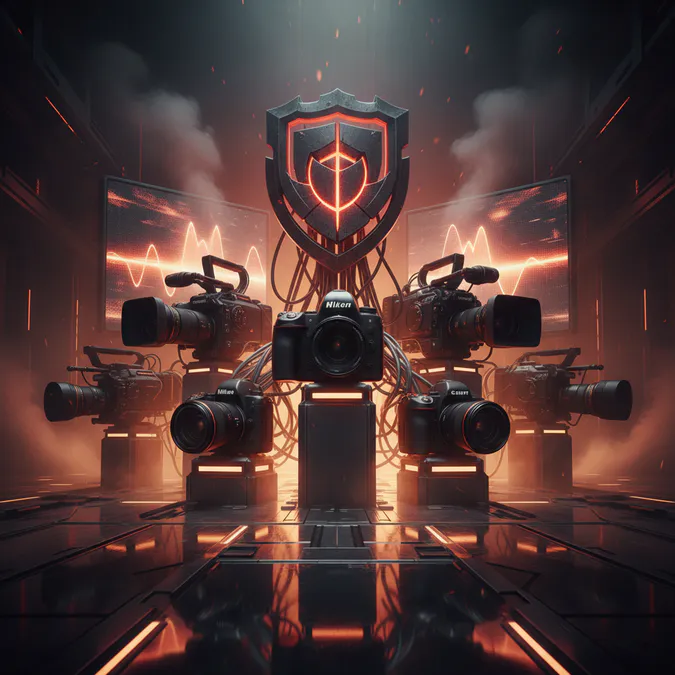
Nikon's position is particularly clear. Fumiko Kawabata, Senior Vice President of Marketing and Planning at Nikon Inc., stated: "Nikon's stance is straightforward: We will always back the human element of creativity as well as the photographers, filmmakers, and artists who bring it to life." [PetaPixel] This isn't corporate hedging—it's a direct commitment to preserving human creativity as central to the photographic process and rejecting generative AI photography.
Fujifilm takes a similarly principled approach to generative AI photography. Yuji Igarashi, General Manager of the Professional Imaging Group at Fujifilm, explained the distinction clearly: "I think what's most important is to be able to distinguish clearly between whether it's generative or not... AI is something to assist taking pictures like autofocus, or detection, et cetera, rather than generating something in the camera." [PetaPixel] This statement encapsulates the industry's position on generative AI photography: support AI tools that enhance capture, reject generative AI photography that creates synthetic images.
This consensus reflects a shared understanding among camera manufacturers that their products serve a specific purpose: capturing authentic moments and enabling human creativity. Generative AI photography, by definition, creates synthetic content rather than capturing reality. The two purposes are fundamentally misaligned with the core mission of photography.
Contrasting Tech Industry Enthusiasm
The camera industry's restraint stands in stark contrast to the broader technology sector's AI fervor. Tech executives have become so focused on artificial intelligence that reporting suggests they now mention "AI" more frequently than they discuss "earnings"—a remarkable shift in corporate priorities.
The numbers underscore this enthusiasm. According to Andreessen Horowitz's analysis of enterprise AI adoption, OpenAI, Gemini, and Anthropic command 89% of enterprise LLM wallet share, indicating massive investment and deployment across the tech sector. Enterprise organizations are deploying a median of 14 different generative media models in production environments, demonstrating the breadth of AI integration happening right now. [Andreessen Horowitz]
This rapid adoption continues accelerating. Generative models are being released every 4-6 weeks, creating a relentless pace of innovation and deployment. The tech industry views this as progress; camera manufacturers view it as a cautionary tale about moving too fast without considering consequences for generative AI photography integration.
The philosophical difference is profound. Tech executives prioritize innovation velocity and market capture. Camera manufacturers prioritize authenticity, user trust, and the integrity of the photographic medium itself. These aren't compatible objectives when it comes to generative AI photography in cameras.
Why Camera Brands Are Drawing the Line
The camera industry's resistance to generative AI photography stems from several interconnected concerns, each rooted in the fundamental purpose of photography.
Authenticity and Trust
Photography has always been about capturing reality. A photograph serves as evidence—of a moment, a place, a person. When you look at a photograph, you trust that it represents something that actually happened. Generative AI photography undermines this trust by enabling the creation of synthetic images that never existed in reality. Embedding this capability directly into cameras would fundamentally compromise the medium's credibility and the viewer's ability to trust photographic evidence.
Preserving Human Creativity
Camera manufacturers recognize the importance of human creativity in photography. The photographer's vision, composition, timing, and artistic choices are what transform a camera into a creative tool. Generative AI photography that creates images algorithmically removes the human element entirely. By rejecting generative AI photography, camera brands are affirming that photography is fundamentally about human expression, not algorithmic output.
Misinformation and Societal Impact
There's a practical concern about misinformation and societal impact. As generative AI becomes more sophisticated, distinguishing real photographs from synthetic ones becomes increasingly difficult. If cameras themselves could generate fake images through generative AI photography, the erosion of trust in visual media would accelerate dramatically. Camera manufacturers understand they have a responsibility to protect the integrity of photography as a medium and prevent the proliferation of generative AI photography in consumer devices.
Regulatory Compliance
Regulatory pressure is mounting. California's AI Transparency Act, which took effect January 1, 2026, requires disclosure of AI-generated content. Similar regulations are being considered globally. Camera manufacturers recognize that building generative AI photography into cameras would create compliance nightmares and potential liability issues. By staying out of the generative AI photography space, they avoid these regulatory complications.
The Nuanced Position: AI for Enhancement, Not Generation
It's crucial to understand that camera manufacturers aren't anti-AI. They're anti-generative-AI-in-cameras. This distinction is important and reveals sophisticated thinking about technology integration and the proper role of generative AI photography.
Camera brands actively embrace artificial intelligence for legitimate operational enhancements. Autofocus systems powered by AI, image stabilization algorithms, noise reduction, and subject detection all represent valuable applications of machine learning. These tools enhance the photographer's ability to capture their vision without replacing human creativity or introducing generative AI photography capabilities.
Canon and Panasonic have even invested in AI Model Inc., a generative AI startup. However, this investment is specifically designed to use generative AI in product workflows and imaging pipelines—not in consumer cameras themselves. [Digital Camera World] The companies are exploring how generative AI can complement photography in professional production environments, where the distinction between original and generated content can be clearly maintained and disclosed, rather than embedding generative AI photography directly in cameras.
This nuanced position reveals the camera industry's sophistication. They're not Luddites rejecting all technology. They're thoughtful stewards of a medium, carefully evaluating which technologies serve photography's core purpose and which ones undermine it. The rejection of generative AI photography in cameras doesn't mean rejection of AI entirely—it means strategic, purposeful deployment of AI tools that enhance rather than replace human creativity.
The Security Camera Exception
Interestingly, generative AI is finding a foothold in one camera category: security and surveillance. i-PRO, a surveillance camera manufacturer, has introduced generative AI edge cameras designed for real-time analysis and operator assistance, representing a different application of generative AI photography technology.
Gerard Figols, Chief Operating Officer of i-PRO, explained the rationale: "Free text interaction changes the way people work with video. By embedding generative AI directly into the cameras, i-PRO simplifies operators' work." [i-PRO Newsroom] These cameras, launching in June 2026, use on-device generative AI to analyze surveillance footage and assist security personnel.
This exception proves the rule. Security cameras serve a fundamentally different purpose than consumer photography cameras. They're designed for monitoring and analysis, not artistic expression. The generative AI in these cameras assists human operators in understanding footage, not in creating synthetic images through generative AI photography. The use case is sufficiently different that it doesn't contradict the broader industry consensus against generative AI photography in traditional cameras.
Regulatory Landscape and Content Provenance
Camera manufacturers' position is increasingly supported by regulatory developments. California's AI Transparency Act represents a significant shift in how governments approach AI-generated content. Starting January 1, 2026, the law requires disclosure of AI-generated content and summaries of training data used in AI systems.
This regulatory momentum suggests that governments are taking seriously the need to distinguish between authentic and synthetic content. Camera manufacturers, by rejecting generative AI photography in their products, are positioning themselves as allies in this effort. They're saying: our cameras produce authentic photographs, and we're committed to maintaining that distinction.
Other jurisdictions are watching California's approach and considering similar regulations. The global regulatory landscape for AI is shifting toward transparency and accountability. Camera manufacturers that stay out of the generative AI photography space avoid the compliance burden and reputational risk of being associated with synthetic content creation.
Implications for Photography and Visual Trust
The camera industry's unified stance against generative AI photography has profound implications for the future of photography and trust in visual media.
Market Differentiation
First, it establishes a clear market differentiation. Camera manufacturers can market their products as tools for authentic image capture, not synthetic content creation. This distinction will become increasingly valuable as concerns about deepfakes and misinformation grow. Positioning cameras as generative AI photography-free devices creates competitive advantage and builds consumer confidence.
Protecting Professional Photography
Second, it protects the professional photography market. Professional photographers depend on the credibility of their work. If cameras could generate images through generative AI photography, the distinction between a photographer's skill and algorithmic output would blur. By rejecting generative AI photography, camera manufacturers protect the value of professional photography and the livelihoods of photographers worldwide.
Building Consumer Trust
Third, it signals to consumers and regulators that the photography industry takes authenticity seriously. This positioning builds trust and differentiates cameras from other AI-enabled devices that might prioritize convenience over authenticity. Consumers can trust that images from traditional cameras represent genuine moments, not synthetic creations from generative AI photography.
Thoughtful AI Integration
Fourth, it creates space for thoughtful integration of AI in photography workflows. Rather than rushing to embed generative AI photography in cameras, the industry can explore how AI can enhance photography in ways that preserve authenticity and human creativity. This measured approach is more likely to produce genuinely valuable innovations that serve photographers rather than replace them.
Frequently Asked Questions About Generative AI Photography
What is generative AI photography?
Generative AI photography refers to technology that creates entirely new images from text prompts, algorithms, or other inputs without capturing an actual scene. Unlike traditional photography, which captures real moments, generative AI photography produces synthetic images that never existed in reality. This distinction is fundamental to understanding why camera manufacturers reject generative AI photography.
Why do camera manufacturers reject generative AI photography?
Camera manufacturers reject generative AI photography because it contradicts the fundamental purpose of cameras: capturing authentic moments. Embedding generative AI photography in cameras would undermine trust in photographs, compromise the medium's credibility, remove the human creative element that defines photography, and potentially violate emerging regulations requiring disclosure of AI-generated content.
Do camera brands use any AI technology?
Yes, camera manufacturers actively use AI for operational enhancements like autofocus, image stabilization, noise reduction, and subject detection. They reject generative AI photography specifically—not all artificial intelligence. This distinction is crucial to understanding their position on AI in photography.
How does generative AI photography differ from AI-enhanced photography?
AI-enhanced photography uses machine learning to improve captured images through autofocus, stabilization, or noise reduction. Generative AI photography creates entirely new synthetic images from scratch. Camera brands support the former while rejecting the latter, maintaining a clear boundary between enhancement and generation.
Will regulations affect generative AI photography in cameras?
Yes, regulations like California's AI Transparency Act require disclosure of AI-generated content. These regulations support camera manufacturers' position against generative AI photography by establishing legal requirements for transparency about synthetic content and protecting consumers from undisclosed generative AI photography.
What about security cameras and generative AI photography?
Security cameras represent an exception to the broader rejection of generative AI photography. Some surveillance manufacturers use generative AI to assist operators in analyzing footage, not to create synthetic images. This use case differs fundamentally from consumer photography, where generative AI photography would undermine authenticity and trust.
Can I use generative AI photography tools outside of cameras?
Yes, generative AI photography tools exist as standalone software and web applications. The camera industry's position specifically targets embedding generative AI photography in cameras themselves, not the existence of these tools in other contexts where their synthetic nature can be clearly disclosed.
Key Takeaways
The camera industry's unified rejection of generative AI photography represents a rare moment of industry consensus around principle rather than profit. While tech executives chase AI adoption metrics, camera manufacturers are protecting something more fundamental: the integrity of photography as a medium for capturing authentic moments and expressing human creativity.
This stance doesn't mean AI has no role in photography. Operational enhancements, workflow tools, and assistive features all have legitimate applications. But generative AI photography that creates synthetic images belongs in different tools and contexts, not in cameras designed to capture reality.
As the technology industry continues its rapid AI adoption, the camera industry's measured approach offers an important counterpoint. Not every innovation belongs in every tool. Sometimes the most valuable decision is to say no—to protect what matters most about a medium, even when saying yes would be easier and more profitable.
For photographers, this means their cameras will continue to be tools for capturing authentic moments and expressing creative vision. For consumers, it means photographs from cameras will remain trustworthy representations of reality. For the broader media landscape, it means at least one industry is drawing a clear line between authentic content and synthetic generation through generative AI photography.
In an era of rapid AI adoption and blurring lines between real and artificial, that clarity is increasingly valuable. The camera industry's stance on generative AI photography sets a precedent for thoughtful technology integration that prioritizes authenticity and human creativity over algorithmic convenience.
Sources
- Every Camera Brand Agrees: Generative AI Doesn't Belong in Photography
- GenAI is Considered a Threat to Traditional Photography, So Why Have These Two Camera Companies Invested in an AI Startup?
- i-PRO Introduces Its First Cameras with Generative AI at the Edge
- The State of Generative Media 2026
- 2026 Year in Preview: AI Regulatory Developments for Companies to Watch Out For
- Where AI Regulation is Heading in 2026: A Global Outlook
- Look for New Ways to Create Value When Deploying Gen AI
- Hanwha Vision News Center