The video design trends 2026 are reshaping creative production fundamentally. The video production landscape is undergoing a seismic shift in 2026, driven by the convergence of artificial intelligence, artisanal craftsmanship, and experimental aesthetics. As highlighted by industry leaders like Envato Tuts+, this year marks a pivotal moment where automation and creativity coexist, creating unprecedented opportunities and challenges for designers, producers, and creative teams worldwide.
The trends emerging in 2026 reflect a broader transformation in digital media. The US video postproduction market has reached $7.1 billion, growing at a steady 4.4% compound annual growth rate, while the global AI filmmaking market is projected to explode from $3.24 billion in 2024 to $23.54 billion by 2033 at a remarkable 25.4% CAGR. These numbers tell a story of rapid adoption and investment in new technologies that are fundamentally changing how video content is created, edited, and distributed.
Understanding these video design trends 2026 is essential for anyone working in video production, motion design, or digital marketing. Whether you're a freelancer, agency owner, or in-house creative director, the tools and aesthetics dominating 2026 will directly impact your workflow, client expectations, and competitive positioning.
AI-Driven Post-Production: Video Design Trends 2026 in Efficiency
Artificial intelligence has moved from experimental territory into mainstream production workflows. According to the Artlist Creative Trend Report, 87% of creative professionals now use AI tools for video creation, with 66% using them we
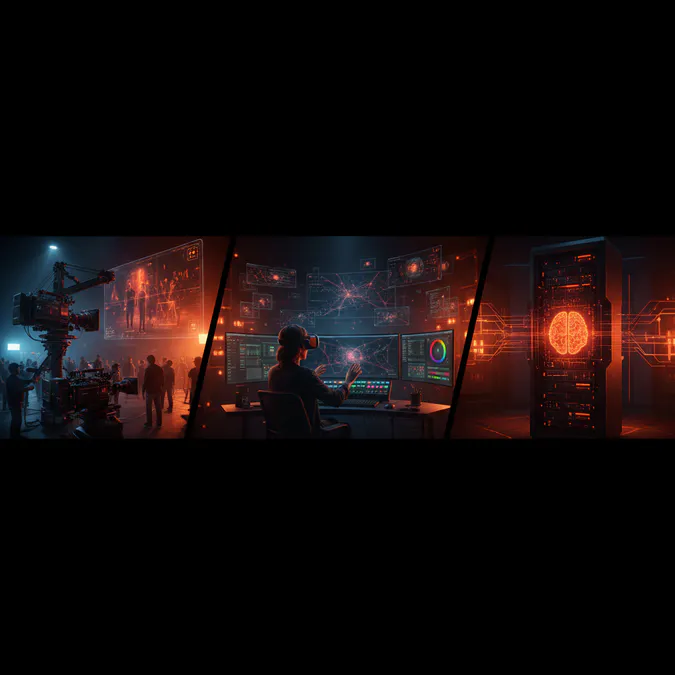
The impact on post-production is particularly dramatic. AI-driven tools are automating editing, visual effects, color correction, and even content generation, drastically reducing both costs and timelines. The numbers are compelling: AI reduces post-production costs by up to 25% through automated editing and cloud-based tools. For studios managing multiple projects simultaneously, this efficiency gain translates directly to profitability and faster turnaround times.
The market reflects this shift. The global AI video generator software market is projected to grow from $1.81 billion in 2026 to $21.61 billion by 2034, representing a 46% compound annual growth rate. This explosive growth is driven by demand for personalized content and breakthrough advances in generative AI technology.
One of the most striking statistics comes from Beverly Boy Productions: AI-generated video ads currently represent roughly 30% of all digital video ads, with that figure rising toward 40% by 2026. This means that by the end of 2026, nearly half of all digital video advertising will leverage AI generation in some form.
Practical Applications of AI in Post-Production
The practical applications are diverse and transformative. AI tools now handle:
- Automated editing and scene detection
- Real-time color grading and correction
- Intelligent object removal and background replacement
- Personalized video generation at scale
- Subtitle and caption generation
- Audio synchronization and enhancement
Over 60% of video teams are expected to use AI tools by 2026 for faster workflows, fundamentally changing how creative teams operate. Rather than replacing human creativity, these tools augment it, allowing creators to focus on conceptual and strategic work while automation handles technical execution.
Hallucination Aesthetics: Exploring the Surreal in Video Design Trends 2026
While AI efficiency dominates one side of the trend spectrum, a more experimental aesthetic is emerging on the other: hallucination aesthetics. This trend leverages AI's generative quirks—the unexpected, dreamlike, and sometimes bizarre outputs that occur when AI models generate content—as intentional creative tools.
Hallucination aesthetics represent a fascinating departure from the polished, perfected visual language that has dominated digital media for the past decade. Audiences, fatigued by overly processed and artificial-looking content, are increasingly drawn to visuals that embrace imperfection, surrealism, and the unexpected.
How Hallucination Aesthetics Work
This aesthetic works by:
- Intentionally using AI generation artifacts as design elements
- Blending reality and abstraction in dreamlike sequences
- Embracing the "glitchy" quality of AI outputs
- Creating surreal, otherworldly atmospheres
- Combining AI-generated elements with live-action footage
The appeal is psychological. In a world saturated with hyper-realistic CGI and perfectly rendered visuals, the slightly "off" quality of hallucination aesthetics feels refreshingly authentic and human. It signals that the creator is willing to take risks and experiment, rather than defaulting to safe, conventional approaches.
Best Use Cases for Hallucination Aesthetics
Brands and creators using this aesthetic effectively communicate innovation, creativity, and a willingness to push boundaries. It's particularly effective for:
- Music videos and artistic projects
- Fashion and luxury brand campaigns
- Tech product launches
- Experimental documentary work
- Social media content designed to stand out
Craft-Focused Premium Campaigns: The Value of Authenticity
Paradoxically, as AI automation becomes ubiquitous, there's a simultaneous surge in demand for craft-focused, handcrafted premium content. This trend represents a deliberate counter-movement to algorithmic production, creating a bifurcated market where both extremes thrive.
Defining Craft-Focused Production
Craft-focused campaigns emphasize:
- Meticulous attention to detail
- Human artistry and skill
- Premium production values
- Authentic storytelling
- Limited, exclusive production runs
- Transparent creative processes
This approach appeals to luxury brands, high-end products, and creators targeting discerning audiences willing to pay for quality. The message is clear: while AI handles commodity content, human craftsmanship creates premium experiences.
Why Craft Matters in an AI-Driven Market
The strategy works because it creates differentiation in a market increasingly flooded with AI-generated content. When 40% of digital video ads are AI-generated, the 60% that showcase human craftsmanship become more valuable and memorable.
Successful craft-focused campaigns typically involve:
- Extensive pre-production planning and creative development
- Skilled cinematography and lighting design
- Professional actors and talent
- Custom music and sound design
- Frame-by-frame color grading
- Meticulous post-production refinement
These campaigns often cost significantly more than AI-generated alternatives, but they deliver disproportionate returns through brand prestige, audience engagement, and memorability. For brands positioning themselves as premium or luxury, this investment is essential for maintaining market positioning and justifying premium pricing.
Procedural Motion Graphics: Automation and Customization
Procedural motion graphics represent a middle ground between full automation and complete manual creation. Rather than hand-animating every element, procedural systems use algorithms to generate animations based on defined parameters and rules.
Advantages of Procedural Systems
This approach offers several compelling advantages:
- Infinite variations from a single design system
- Rapid iteration and customization
- Consistent visual language across projects
- Reduced production time for complex animations
- Scalability for large-scale campaigns
- Real-time adjustments and previews
Procedural motion graphics are becoming increasingly prevalent because they solve a critical problem in modern production: the need for personalized, customized content at scale. A single procedural system can generate thousands of unique variations, each tailored to specific audiences, platforms, or contexts.
Common Applications
Procedural motion graphics excel in diverse applications:
- Data visualization and infographics
- Generative title sequences
- Dynamic social media content
- Personalized video ads
- Interactive motion graphics
- Real-time broadcast graphics
Tools enabling procedural motion graphics have become more accessible, allowing mid-level studios and freelancers to implement these systems without extensive programming knowledge. This democratization is driving adoption across the industry.
Efficiency and Scalability Benefits
The efficiency gains are substantial. A procedural system that might take weeks to build initially can then generate hundreds of variations in hours, making it ideal for campaigns requiring multiple versions or continuous content production. This makes procedural systems particularly valuable for streaming platforms, social media agencies, and brands requiring constant content refresh.
Implications for Designers and Businesses
These four trends—AI-driven post-production, hallucination aesthetics, craft-focused campaigns, and procedural motion graphics—aren't isolated phenomena. They represent a fundamental restructuring of how video content is created and valued in the marketplace. Understanding video design trends 2026 is critical for staying competitive.
For Creative Professionals
For creative professionals, the implications are clear and actionable:
- Technical skills remain essential, but strategic thinking becomes more valuable
- Understanding AI tools is no longer optional—it's a baseline requirement for competitive employment
- Specialization in either premium craft or innovative aesthetics creates competitive advantage
- Hybrid approaches combining AI efficiency with human creativity deliver the best results
- Continuous learning and adaptation are essential for staying relevant in rapidly evolving markets
For Businesses and Brands
For businesses and brands, the message is equally important and strategic:
- AI-generated content is appropriate for high-volume, commodity applications and rapid iteration
- Premium positioning requires investment in craft and human creativity to justify premium pricing
- Experimental aesthetics can differentiate brands in crowded markets and appeal to innovative audiences
- Procedural systems enable personalization at scale, critical for modern marketing demands
- A mixed approach using multiple strategies delivers optimal results across different audience segments
Strategic Decision Framework
The key to success in 2026 is developing a strategic framework for selecting the right approach for each project. Consider these factors when deciding which trend to emphasize:
- Budget constraints and ROI requirements
- Target audience expectations and preferences
- Brand positioning and market differentiation needs
- Timeline and production velocity requirements
- Scalability and personalization demands
- Competitive landscape and market saturation
The Bottom Line
The video and motion design landscape in 2026 is characterized by abundance and choice. AI tools have democratized production, making high-quality video creation accessible to creators with limited budgets. Simultaneously, the market has fragmented into multiple aesthetic and production approaches, each serving different purposes and audiences.
Success in this environment requires understanding which approach serves your specific goals. Are you creating commodity content that needs to reach maximum audiences efficiently? AI-driven production is your answer. Are you building premium brand experiences that demand differentiation? Craft-focused campaigns and experimental aesthetics are worth the investment. Do you need to scale personalized content? Procedural systems offer the ideal balance.
The most successful creators and agencies in 2026 won't choose between these approaches—they'll master all of them, deploying each strategically based on project requirements, audience expectations, and business objectives. The future of video production isn't about one dominant trend; it's about intelligent, purposeful selection from an expanding toolkit of creative possibilities. By understanding these four major video design trends 2026 and their applications, you'll be positioned to thrive in an increasingly sophisticated and competitive creative landscape.
Key Takeaways
- AI-driven post-production tools are now mainstream, with 87% of creative professionals using them for video creation
- Hallucination aesthetics represent a counter-trend embracing AI's imperfections as intentional design elements
- Craft-focused premium campaigns create differentiation in markets saturated with AI-generated content
- Procedural motion graphics enable personalized content at scale without extensive manual animation
- The most successful strategy combines multiple approaches based on project goals and audience expectations
Sources
- Automated Pipeline
- AI Video Generator Software Market Outlook 2026-2034
- AI in Video Production: 2026 Trends & Tools
- AI Video Trends 2026: The Future of Creative Production
- AI in Filmmaking Market Size & Share | Industry Report, 2033
- Video Postproduction Services in the US Industry Analysis, 2026
- Source: argushd.com
- Source: ltx.studio
- Source: visla.us
- Source: gudsho.com