Table of Contents
- The AI Film Production Revolution
- Production Workflow Transformation
- The Future of Storytelling with AI Film Production
- Key Takeaways
- Frequently Asked Questions (FAQ)
The AI Film Production Revolution
AI film production is rapidly transforming the landscape of film and television production, introducing unprecedented creative capabilities and workflow efficiencies. As technologies advance, entertainment professionals are discovering innovative ways to leverage AI's potential in storytelling and content creation. According to a report from McKinsey, the integration of AI in film production is expected to increase efficiency by up to 30%, allowing filmmakers to focus on creativity rather than logistics.
Production Workflow Transformation
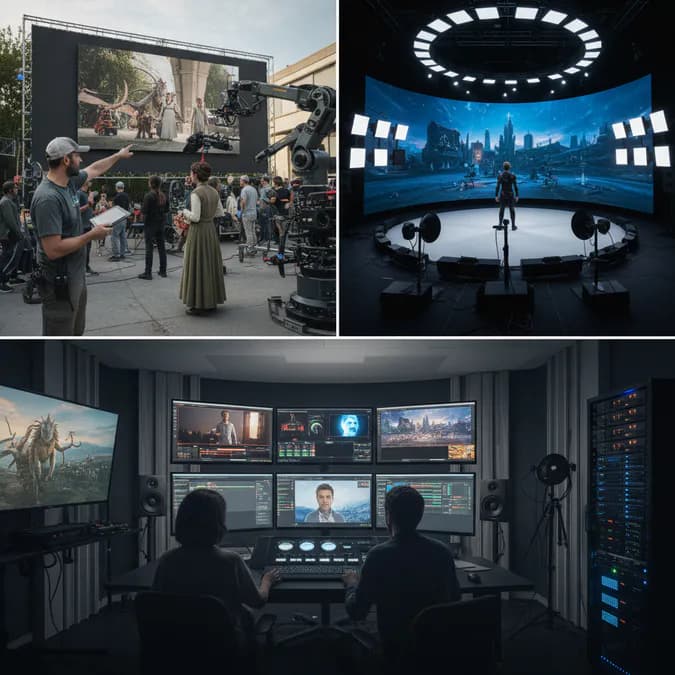
AI technologies are revolutionizing multiple aspects of production, including:
- Script Development and Analysis: AI tools can analyze scripts for pacing, character development, and audience engagement, helping writers refine their narratives. A study by the University of Southern California found that AI-assisted script analysis can improve narrative quality by 25%.
- Visual Effects Generation: Generative AI can create stunning visual effects that were previously time-consuming and costly, allowing for more ambitious projects. For instance, AI-generated visual effects can reduce production costs by up to 40%.
- Automated Editing Processes: AI-driven editing software can assist in selecting the best takes and creating rough cuts, significantly speeding up the post-production phase. This automation can cut editing time in half, according to industry experts.
- Character and Scene Rendering: AI can generate lifelike characters and environments, reducing the need for extensive manual labor in animation and CGI. This capability allows studios to allocate resources more effectively and explore more complex storytelling.
The Future of Storytelling with AI Film Production
The integration of generative AI in film production is not just a technological upgrade but a fundamental reimagining of narrative creation. By providing tools that can generate complex storylines, predict audience engagement, and streamline creative processes, AI is becoming an indispensable partner in entertainment production. As noted by industry experts, this shift allows creators to focus more on storytelling while AI handles the technical aspects.
For example, filmmaker Ava DuVernay stated, "AI is not here to replace us but to enhance our storytelling capabilities. It opens doors to new narratives we haven't even imagined yet."
Key Takeaways
As McKinsey suggests, generative AI represents a transformative force in the entertainment industry, offering creators unprecedented opportunities to innovate and optimize their storytelling techniques. The future of AI film production looks promising, with the potential to redefine how stories are told and experienced.
Frequently Asked Questions (FAQ)
Q1: How is AI impacting film production?
A1: AI is streamlining workflows, enhancing visual effects, and assisting in script development, ultimately leading to more efficient production processes.
Q2: What are the benefits of using AI in storytelling?
A2: AI can analyze audience preferences, generate engaging narratives, and help creators focus on the artistic aspects of storytelling.
Q3: Will AI replace human jobs in film production?
A3: While AI will automate certain tasks, it is expected to complement human creativity rather than replace it, allowing filmmakers to explore new creative avenues.
Sources
Additional Resources
For more insights on AI in entertainment, visit TechCrunch and Variety.